 Skip to content
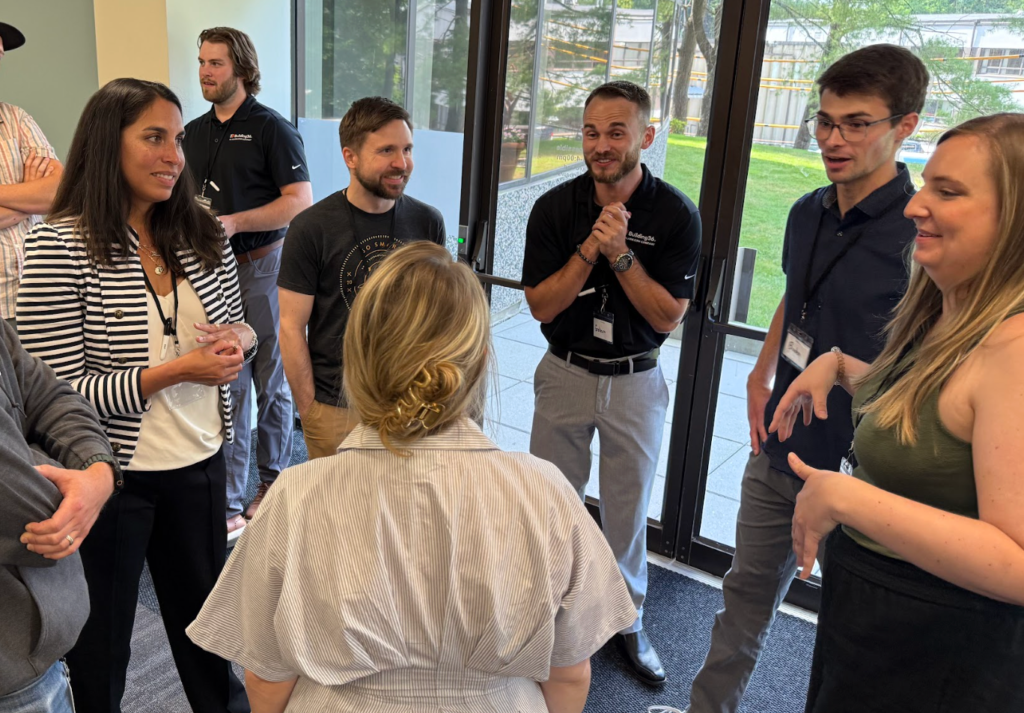
Teams rarely fail because they lack talent. They struggle because the daily grind makes it nearly impossible to really listen, pivot on a dime, and trust that it’s safe to try something new. Improv-based team building tackles those challenges head-on by letting people practice new ways of interacting in a low-stakes, high-fun environment instead of sitting through another slide deck or personality assessment. New times call for new tools and with AI and extreme rapid organizational change, we’re in a new era of work and expectations.
At Your Team Is Amazing!, we help San Francisco Bay Area teams develop the reflexes they actually need: sharper listening, greater adaptability, and the confidence that you won’t get grilled for trying something new.
Here are 7 ways improv can serve your business.
1. The “communication gap” is usually just a listening gap
Improv scenes only work if people shut out the noise, listen closely, and respond to what was actually said( including “the question behind the question”). Learning improv forces active listening in a way that clicks immediately. In our workshops, exercises teaching skills such as “Yes, and…” inspires people to acknowledge others’ ideas and build on them, squashing the habit of talking over each other. This drastically cuts through gridlock and lack of focus that usually plagues meetings(always have an agenda!).
2. Improv games create a safety net for experimentation
In most offices, repeating a playbook of what worked last time, with minor iterations, is the default. Risk-taking prized, but failures are not. Employees end-up holding back and don’t ask the “dumb” question or share a raw idea because they’re worried about the fallout. Improv asks people to take small social risks (being seen, making mistakes) in a totally safe environment, so teams see firsthand that nothing life-threating happens when they stumble. Because everyone is in it together, hierarchies melt away and people realize they won’t be shut down when they try something new back at the office.
3. Improv skills build the reflex to pivot
Work moves fast, priorities shift, roadmaps get scrapped, and surprise firedrills pop up daily. The unscripted nature of improv trains people to stay flexible and respond creatively when plans fall apart, instead of freezing or pointing fingers. Teams practice thinking on their feet together, so work curveballs feel more like shared puzzles to solve than personal crises. The key is to expect the unexpected.
4. Learning improv shifts communication from “No, but” into “Yes, and”
Improv is the ultimate team sport. You only win if you make your partner look like a genius and build something better than any one person could do alone. The “Yes, and” mindset replaces knee-jerk rejections, leading to open-minded brainstorming and stopping the idea-killing behaviors that quietly drain momentum. Teams leave with a shorthand they can use every day. It’s about literally saying “Can we ‘Yes, and’ this?” when they feel a discussion hitting a wall.
5. It stops people from over-polishing
Breakthroughs happen when people stop trying to be perfect. Most teams are conditioned to only bring finished, flawless answers to the table. Improv forces people to generate ideas quickly, lean into imperfection, and explore options instead of self-censoring too soon. By laughing off small failures, teams shake off perfectionism and become more willing to pitch the “crazy” idea that might actually work.
6. Playing improv games turn the “The Boss” back into a human
When everyone is playing the same playful games, ranks don’t matter. People interact as humans rather than just defined within an org chart. This levels the playing field, making it much easier for the quietest person in the room to speak up and contribute the workshop, because they’ve already been heard by the senior leadership.
7. What’s fun worth? It actually clears the air.
Most teams are just plain burnt out. For some, return to the office and back-to-back Zooms create a grind that’s hard to shake. The laughter and play in improv are stress relievers. Shared fun creates real memories and inside jokes, glueing the team together and making it more likely people will show up actually interested and not checked out at the next meeting.
Here’s our Approach:
A typical Your Team Is Amazing session starts with dead-simple, low-pressure warm-ups, then moves into interactive games and fast debriefs that connect the fun back to your actual job. People laugh and step outside their comfort zones, but they also leave with actual tools they can use in their every day work.
Ready to explore bring this powerful too to your team? If your team needs a reset and new skills, reach out or schedule a short call with us. We’ll build a session tailored to your group’s size and how much they’re willing to lean in, ranging from just-for-fun to more reflective and skill building focused programs.
